
The Bottleneck Is Not AI Capability. It Is Legacy System Deployment.

By Faiz · July 13, 2026
All model development could stop today and we would still have decades of implementation work ahead.
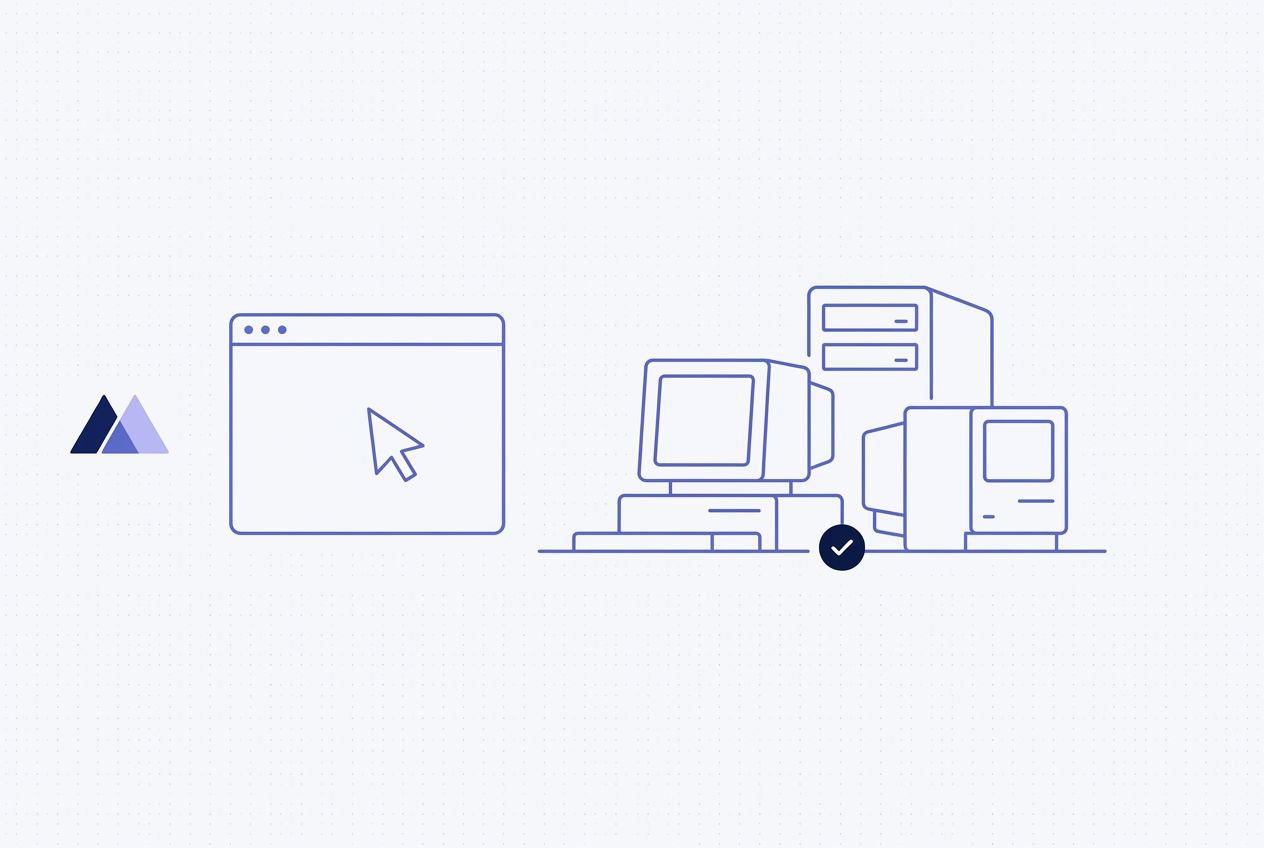
That is not a prediction. It is arithmetic. There are millions of legacy desktop systems running enterprise operations worldwide. EHRs in healthcare. ERPs in logistics and manufacturing. Claims platforms in insurance. Case management systems in legal and government. These systems will not be replaced anytime soon. Replacement timelines for enterprise systems of record are measured in decades, not years.
The Last Mile Problem
AI capability is not the bottleneck. The models work. They generate clinical notes, process claims, extract data, classify documents. The AI does its job.
The bottleneck is deployment. Specifically, the last mile: getting AI output into the system the customer actually uses.
This bottleneck affects every AI company selling to enterprises that run legacy systems. The sales pitch is easy: "our AI automates this workflow." The deployment reality is hard: "but your customer's system has no API, and the integration work takes four months."
AI companies lose deals over this gap. Not because the AI is not impressive, but because the customer cannot wait four months to see it work inside their system. The competitor who can deploy in 1 week wins the deal.
Why Traditional Solutions Fall Short
The scale of this problem is growing, not shrinking. Every year, more AI companies enter markets where legacy desktop systems dominate. Healthcare, logistics, financial services, government. Each company hits the same wall. And the traditional solutions (custom API integrations, legacy RPA, manual data entry teams) all have limitations at scale.
Minicor Has Solved This
The deployment problem is not open. Minicor closed it. You describe the workflow, you get an API endpoint, and every call fires a self-healing desktop automation against the legacy system. You call the endpoint. Minicor does the rest.
You can stand up an interface to a system that has no API in minutes, and be in production in hours.
What makes that safe to run in production is how the work is split into two layers. The first is deterministic: your workflow runs as plain Python driving the desktop the way a trained operator would. It does the actual job on every call, fast and cheap and repeatable, because a known workflow should never be re-reasoned from scratch. Re-deriving each click with a model on every call would be slow, expensive, and non-deterministic, which is exactly what enterprise operations cannot tolerate.
The second layer is the recovery agent, and it only wakes up when the deterministic path breaks. A vendor ships an update, a button moves, a modal appears that was not there yesterday. A reasoning model decides what the workflow was trying to do, a vision model grounds that intent to the right element on the actual screen, and a reflection step checks the result against what the screen now shows and corrects itself if it got it wrong. The automation heals instead of failing.
That is what separates it from everything that came before. Selector-based RPA snaps the moment the UI shifts. A pure screen-driving agent is slow and drifts. Pairing a deterministic workflow with a self-healing recovery layer is what pushes click accuracy to the 96-99% range, against roughly 80-85% for a pure computer-use approach.
For AI companies, this is not just a technical win. It is a go-to-market advantage. Deploying on any legacy desktop system in hours instead of months, and keeping it live as the system changes underneath you, means more deals closed, faster revenue, and customers who stay.
The long-term implication is broader. If the deployment bottleneck can be solved at scale, the pace of AI adoption in legacy-heavy industries accelerates dramatically. The AI was never the problem. Getting it into the systems people use every day was the problem.
Visit Minicor
RPA platform for deploying AI into legacy desktop systems with self-healing desktop automations and computer-use agents.
Get startedRelated reading
Written by
Faiz
RPA platform for deploying AI into legacy desktop systems with self-healing desktop automations and computer-use agents.